
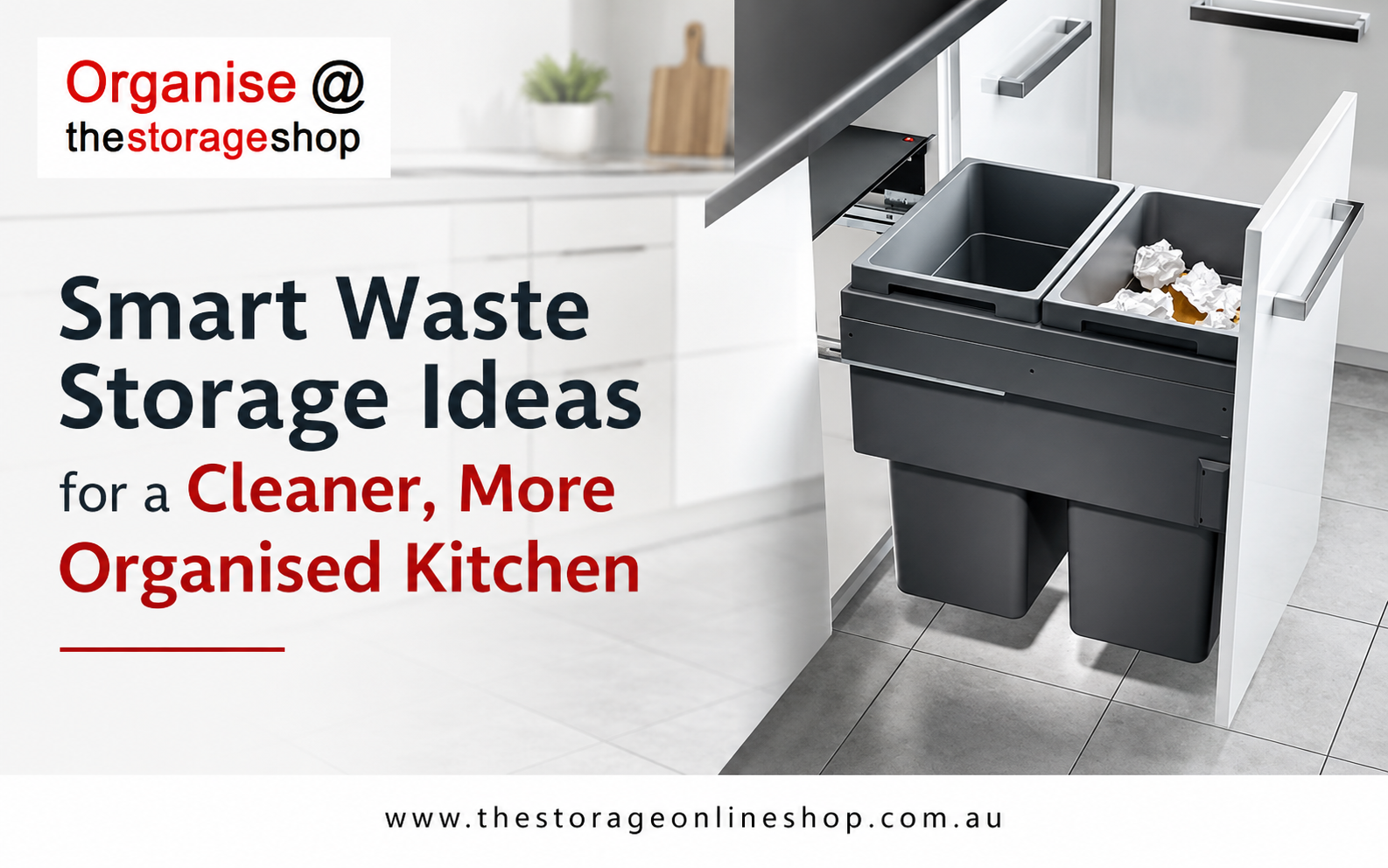
A well-organised kitchen is easier to cook in, easier to clean and more pleasant to use every day. Yet waste storage is often treated as an afterthought, leaving bags, recycling containers and food scraps in awkward places. Choosing the right kitchen bins can turn an untidy corner into a practical part of the kitchen workflow while keeping unpleasant sights and smells out of view.
The best solution depends on the size of the household, the cabinet layout and the way rubbish is sorted. Some homes need a large general-waste container, while others benefit from separate compartments for recycling, compost and ordinary rubbish. A thoughtful setup should make disposal quick, reduce unnecessary movement and remain simple to empty and clean.
Start with the Way Your Kitchen Is Used
Before choosing a bin, consider where most waste is created. Vegetable peelings usually appear near the preparation bench, packaging is opened close to the pantry, and plates are cleared near the sink or dishwasher. Placing the waste system close to these activity zones prevents people from carrying scraps across the room.
Questions to Ask Before Buying
A useful planning process should include the following questions:
- How many people use the kitchen each day?
- How often is household rubbish collected?
- Do you separate recycling, food scraps and general waste?
- Which cabinet is closest to the main preparation area?
- Are plumbing pipes or cleaning products using valuable cupboard space?
- Is easy access important for children, older family members or people with limited mobility?
- Can the selected compartment be removed easily for washing?
These details help narrow the options and prevent a bin from becoming too small, too difficult to reach or incompatible with the available cabinet.
Use the Area Beneath the Sink More Effectively
The cupboard below the sink is a logical place for waste, but it is also one of the most challenging cabinets to organise. Pipes, traps, hoses and water filters can reduce the usable width and depth. Cleaning bottles may also compete for the same space. Well-planned under sink bins can use the clear areas around the plumbing without making the cupboard feel overcrowded.
A compact bin may fit beside the pipework, while two smaller containers can support basic waste separation. Shallow caddies are useful for food scraps, and removable buckets are easier to carry to an outdoor bin. The key is to measure every obstruction rather than relying only on the external cabinet width.
Measure the Cabinet Carefully
Measure the internal width, depth and height with the door closed. Record the position of pipes, hinges, shelves and door hardware. Remember that the bin must move through its full opening path without striking the plumbing. Allow extra room for handles, lids and mounting brackets.
Consider a Concealed Sliding System
For households that want a streamlined appearance, under sink bins and sliding cabinet systems can keep waste hidden while still making it easy to reach. Instead of bending into a dark cupboard, the user pulls the container forward on runners. This brings the bucket into view and creates better access for disposing of scraps or replacing a liner.
Sliding systems are particularly useful beside a food-preparation bench. They can be opened with one hand, and the surrounding floor remains clear. Many designs also provide more than one compartment, allowing rubbish and recycling to be managed within the same cabinet.
Benefits of a Pullout Arrangement
A sliding setup keeps waste out of sight, clears floor space, improves access and can place several waste streams in one location. It may also reduce awkward bending. However, the runners, lid and frame require space, so check the mounting style and confirm that the cabinet base is strong and level.
Match Capacity to Household Habits
A bigger bin is not always better. Large containers may hold more waste, but rubbish can remain indoors longer and develop odours. Smaller containers need more frequent emptying, although this can support better hygiene. The ideal capacity balances convenience with the household’s collection schedule.
A couple living in an apartment may prefer two modest compartments, while a busy family may need a larger general-waste bucket and a separate recycling section. Households that compost can often reduce the required general-waste capacity by using a small sealed food-scrap caddy.
Think Beyond Total Litres
The number of compartments can be as important as the combined capacity. A dual system supports basic sorting, while several buckets may suit homes separating containers and food waste. Lightweight recycling often needs more volume, whereas food waste becomes heavy quickly, so choose sizes according to actual use.
Make Cleaning and Odour Control Easier
No waste solution remains tidy without regular care. Select containers with smooth internal surfaces and removable buckets. Avoid complicated corners where liquid or crumbs can collect. Liners should fit securely without preventing the lid or cabinet door from closing.
Wipe the frame and runners regularly, especially if the bin sits near the sink. Food leaks should be cleaned immediately. A small layer of absorbent material at the base of the liner may help with moisture, but it should not replace routine washing.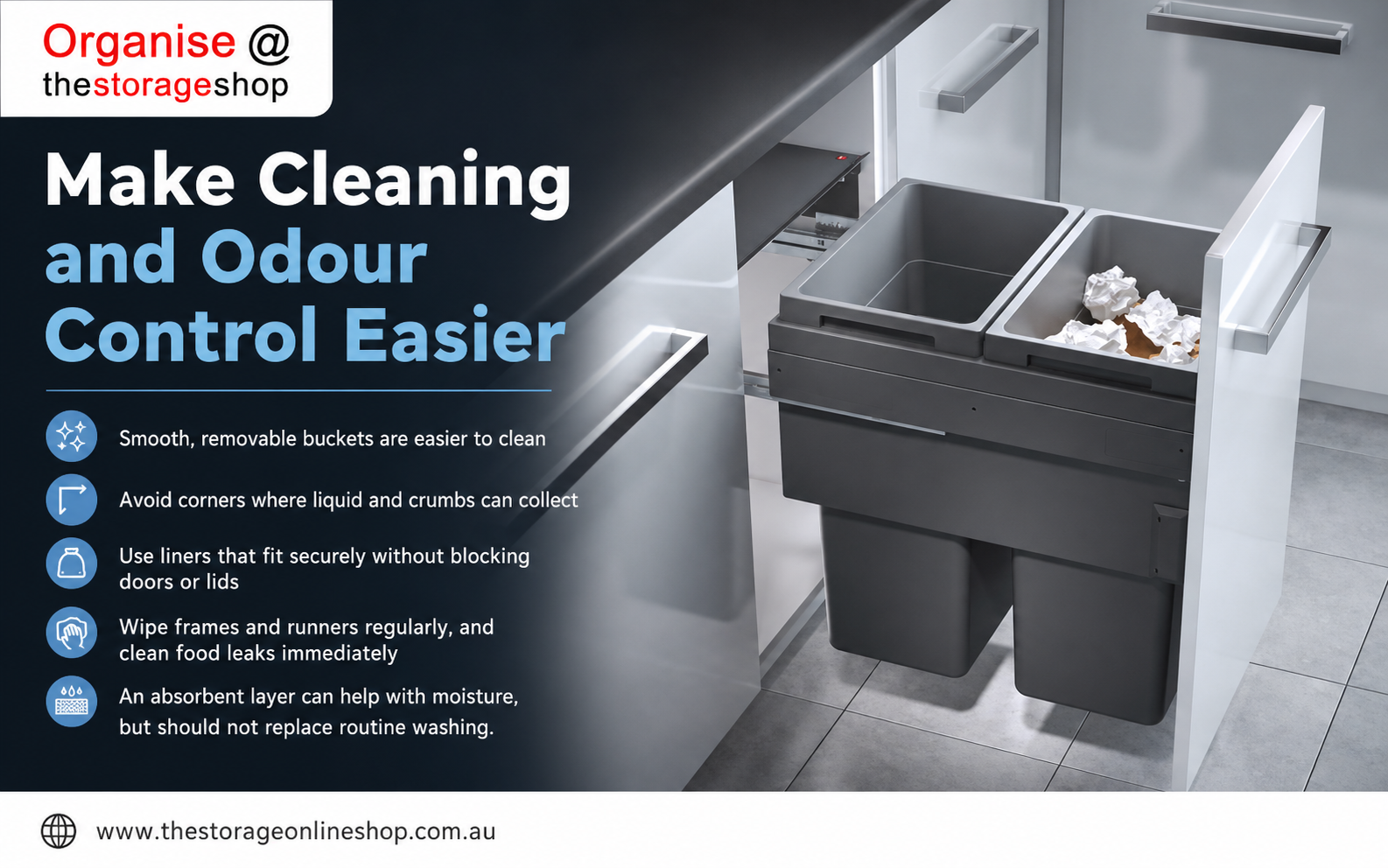
Ventilation also matters. Do not overfill the container, and empty food waste frequently during warm weather. A lid can help contain smells, but a sealed bucket still needs cleaning. Keeping spare liners nearby makes it easier for every household member to maintain the system.
Coordinate Waste Storage with the Rest of the Kitchen
A waste station works best when it supports the broader layout. Position it near the chopping area, dishwasher or main clean-up zone, but avoid placing it where an open door blocks a walkway. In a narrow kitchen, floor clearance is especially important.
Keep liners and recycling supplies nearby, and label compartments when needed. A defined place for each item makes daily tasks more predictable.
Why Choose The Storage Online Shop?
The Storage Online Shop offers home-organisation products across kitchen, laundry, bathroom, wardrobe and other storage categories, with a dedicated selection of cabinet, door-mounted, freestanding and pullout waste solutions. Its range allows Australian households to compare different capacities, mounting styles and configurations in one place, making it easier to select a product suited to an existing cabinet or a new kitchen design. The business also provides Australia-wide delivery information through its website.
Create a System That Is Easy to Maintain
The most successful waste setup is not simply the one with the largest capacity or the most features. It is the one that fits the cabinet, suits the household routine and can be cleaned without difficulty. Careful measuring, realistic capacity planning and sensible placement will produce a solution that continues to work after the novelty of a kitchen upgrade has passed.
For a neat, accessible option that keeps the floor clear, pullout kitchen bins can help bring rubbish and recycling into the cabinet while keeping them close to the preparation area. Compare dimensions, compartment sizes and installation requirements before purchasing so the chosen system works smoothly.
A cleaner kitchen begins with practical storage. Giving every waste stream a clear home reduces clutter and makes everyday clean-up more manageable.