
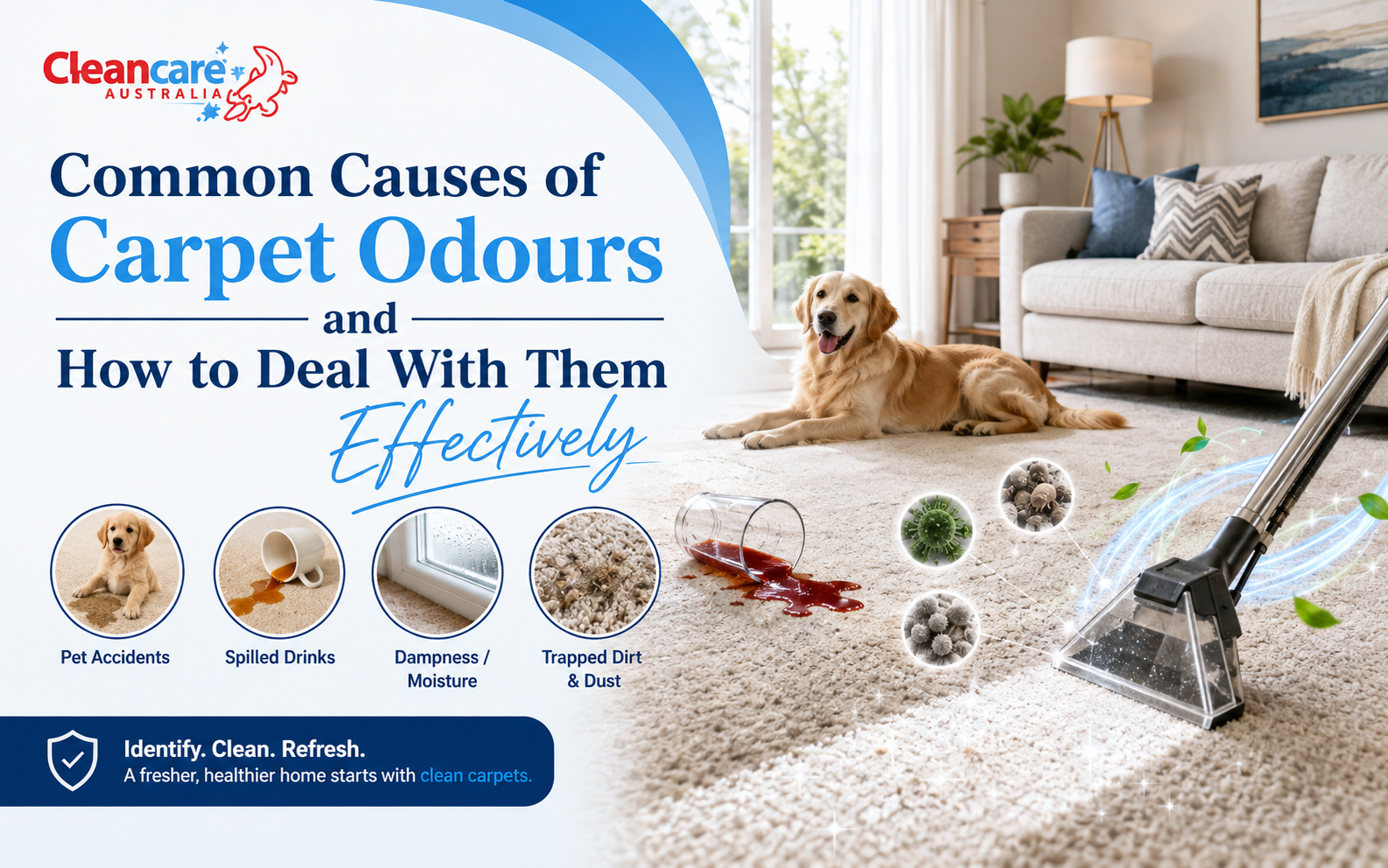
An unpleasant carpet smell is a symptom, not a diagnosis. Before trying to freshen a room, it helps to work out where the odour is coming from.
A carpet deodoriser can support routine freshness, but the best results come from dealing with the underlying source first. Otherwise, fragrance may temporarily change what you smell without resolving the residue or moisture responsible for it.
Foot Traffic Brings More Than Visible Dirt
Shoes carry dust, fine soil, moisture and outdoor contaminants into carpeted areas.
Over time, traffic lanes can collect material even when the carpet does not appear heavily stained.
Regular vacuuming helps reduce the dry soil load before odours have a chance to become noticeable.
Focus on Entrances
Entryways deserve more frequent cleaning than low-use corners.
Doormats Need Cleaning Too
A dirty entrance mat eventually becomes another source of tracked-in soil rather than a barrier against it.
Food and Drink Spills
Dining rooms, lounges and offices are common locations for unnoticed spills.
Milk drinks, soft drinks, food sauces and snacks can leave residues that become unpleasant later.
If an odour is concentrated in one area, inspect for old spots rather than applying rug deodoriser across the entire floor.
Moisture and Slow Drying
Damp carpet can quickly make a room feel stale.
Moisture may come from:
- Spot cleaning
- Wet shoes
- Drink spills
- Excessive carpet-cleaning water
- High humidity
- Leaks or water intrusion
Persistent dampness or building-related water issues should be investigated properly rather than covered with fragrance.
Pet-Related Odours Need Source Control
Pets may contribute hair, outdoor soil and localised accidents.
A rug deodoriser can support freshness after suitable cleaning, but contamination that has penetrated deeply may require more targeted treatment.
Inspect Beyond the Visible Mark
Liquid can travel farther through carpet backing than the surface stain suggests.
Avoid Repeatedly Masking the Smell
If the same odour returns after treatment, the source may still be present.
Professional Assessment May Help
Persistent contamination in underlay or subfloor areas can be more difficult to manage with routine surface cleaning.
Cooking Odours and General Indoor Air
Not every smell originates inside the carpet.
Cooking, smoke, closed windows and stale indoor air can make textiles absorb surrounding odours.
Ventilation therefore plays an important role.
If carpet smells fresher immediately after windows are opened, the room itself may need better airflow in addition to floor maintenance.
Why Vacuuming Is Part of Odour Control
Vacuuming does not merely improve appearance.
Removing fine dry soil, pet hair and food particles reduces material that can contribute to stale smells.
For busy spaces:
- Vacuum more often in traffic lanes.
- Clean under furniture periodically.
- Empty vacuum containers regularly.
- Maintain vacuum filters according to instructions.
- Do not overlook rug edges.
Only after this groundwork does deodorising become a logical finishing step.
Selecting a Deodoriser for Routine Use
The phrase best carpet deodoriser should be interpreted according to the cleaning situation rather than fragrance strength alone.
The best carpet deodoriser for a space should fit the carpet-care routine and be used according to the manufacturer’s instructions.
Factors worth considering include:
- Size of the carpeted area
- Frequency of traffic
- Whether rugs or fitted carpet are being treated
- Source of the odour
- Fragrance preference
- Existing cleaning routine
Build an Odour-Control Routine by Cause
Different odours call for different responses.
Dry, Dusty Smell
Increase vacuuming and check overlooked edges or areas beneath furniture.
Food Smell
Find and remove the spill or residue before deodorising.
Damp Smell
Improve drying and investigate the source of moisture.
General Staleness
Improve ventilation and maintain textiles regularly.
Post-Cleaning Freshness
Once the carpet is genuinely clean and dry, a carpet deodoriser can be considered as part of finishing maintenance.
Common Mistakes
Odour problems are often prolonged by habits such as:
- Spraying fragrance without cleaning
- Leaving damp carpet covered by furniture
- Ignoring rug backing
- Allowing pet hair to accumulate
- Using excessive cleaning solution
- Forgetting upholstery and curtains can also hold odours
- Treating recurring smells as purely cosmetic
A rug deodoriser is most useful when these basic maintenance issues have already been addressed.
Why Choose Us
CleanCare Australia provides carpet-care supplies intended for different stages of cleaning and maintenance. Customers dealing with odour can look beyond a single quick fix and consider products that fit the wider task, whether the priority is routine cleaning, spot treatment or freshness.
That task-based approach can make product selection simpler and more practical.
About Us
CleanCare Australia supplies cleaning products for households, businesses and professional users who need solutions for everyday and specialised maintenance. Carpet care is one part of that broader range.
Our focus is on helping users choose products according to the job rather than making unsupported claims that one product can solve every type of carpet problem.
Treat the Cause Before the Smell
The most effective carpet-odour strategy is investigative. Find out whether the source is soil, food, moisture, pets or indoor air before deciding what treatment is appropriate.
A carpet deodoriser can help maintain a fresher environment after cleaning, and a rug deodoriser may be useful for routine rug care. The best carpet deodoriser is the one used at the right stage—after the cause has been identified and the carpet has received the cleaning attention it actually needs.