Small kitchens are not necessarily short of storage; they are often short of efficiently used storage. Deep cabinets, awkward corners and the area beneath the sink can hold more than expected when items are assigned deliberately.
A practical kitchen organiser strategy starts by deciding what deserves the easiest access and what can be stored farther away.
Begin With What You Use Every Day
Take everything out of one problem cabinet and group items by purpose.
Common categories include:
- Everyday cookware
- Cleaning products
- Food storage
- Waste supplies
- Recycling
- Dishwashing items
- Occasional appliances
This makes it easier to decide where an under sink bin or pull-out solution can free valuable floor or cupboard space.
Use the Under-Sink Area Carefully
The sink cabinet often contains plumbing that limits straightforward shelving.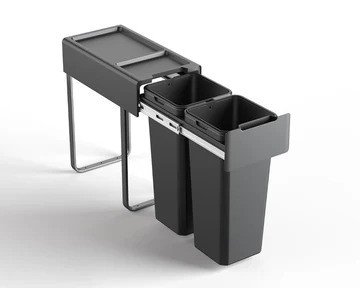
Instead of treating the entire space as unusable, measure around the pipework.
Measure Width, Depth and Height
Do not rely only on the cabinet’s external dimensions.
Measure:
- Internal width
- Usable depth
- Height beneath plumbing
- Door opening
- Hinges
- Pipe positions
An under sink bin needs enough clearance not only to fit inside but also to move comfortably when being emptied.
Think About Removal Clearance
A bin may technically fit beneath the sink but still be difficult to lift out.
Test the Movement
Before buying, imagine the full sequence:
- Open the cabinet.
- Pull or swing the bin out.
- Remove the liner.
- Lift the container clear.
- Replace everything.
If the plumbing blocks step four, choose another arrangement.
Keep Waste Storage Proportionate
Large kitchen bins can dominate a compact cabinet.
Think about how frequently rubbish is removed rather than choosing the largest possible capacity.
A smaller bin emptied more frequently may work better in a tight kitchen, particularly if you also need space for recycling.
Use Vertical Space
Many cabinets have unused height.
Shelves, stackable containers or door-mounted accessories can help use that space more efficiently without making everyday items difficult to reach.
Avoid Over-Organising
Adding too many containers can actually reduce usable storage.
Every kitchen organiser should solve a clear problem. If an insert creates more steps to access something you use daily, it may not be helping.
Separate High-Frequency and Low-Frequency Items
The easiest cabinet positions should be reserved for products used regularly.
Items used once a month can sit higher or farther back.
This simple rule prevents the kitchen from feeling cluttered despite technically having enough storage.
Plan Around Workflow
Waste disposal usually happens near food preparation and cleaning areas.
That is why kitchen bins often work well near the sink or preparation zone.
Ask:
- Where do food scraps originate?
- Where is packaging opened?
- Where do you stand while cleaning?
- Do multiple people cook at once?
The answers can guide bin placement.
Consider Pull-Out Storage
A deep cupboard can hide items at the back.
Pull-out mechanisms bring contents toward you, making the full cabinet easier to use.
They can be particularly useful for waste storage because you do not need to reach deep into a dark cabinet.
Check Hardware Clearance
Hinges, pipes and door widths can affect installation.
Measure first rather than assuming every cabinet can accept the same system.
Reduce What Does Not Need Cabinet Space
Not everything belongs inside a cupboard.
Frequently used utensils can sometimes sit in a controlled countertop holder, while rarely used appliances may be stored elsewhere.
Creating breathing room in cabinets can make the existing space far more functional.
Why Choose Us
Kitchen Organisers focuses on practical storage products that help households make better use of cabinetry. Instead of treating organisation as decoration, the emphasis is on accessibility, fit and everyday movement.
Customers can compare storage and waste solutions according to the dimensions and layout of their own kitchen.
About Us
Kitchen Organisers provides products designed to improve how kitchens use available cabinet space. Our range relates to common storage challenges such as waste management, pull-out access and difficult internal layouts.
We encourage careful measuring so that the selected solution works with the kitchen rather than against it.
Conclusion
A limited cabinet does not need to become a permanently cluttered cabinet.
Measure around obstacles, keep frequently used items accessible and select kitchen bins according to the available space and household routine. Good organisation is less about squeezing in more items and more about making the items you already have easier to use.